

Tilting at Windmills
Don Quixote Tilting at a Windmill by Willima Stewart Watson
For all the things that have changed since our last market commentary, just as many things have not. The news cycle continues to spin at ever increasing speeds, but the market remains indifferent to headline news. Asset prices continue to climb, and Geopolitics dominate the headlines. Even with the removal of Venezuelan president Nicolas Maduro by U.S. forces oil prices remain stable. For all the talk in the media about how this will adversely affect the Canadian oil market, there is no serious plan to rebuild the Venezuelan oil industry. With continued talk of AI being in a bubble, tech stocks continue to move higher.
When words and actions don’t align, it becomes even more important to look for a signal in the noise. Andrew Ross Sorkin has recently argued that debt is the singular through-line behind every major financial crisis, and it’s been observed that AI and data center investment has been funded with increasing debt. Oracle alone holds nearly $108 billion in debt following massive bond issuances and loans in late 2025 to fund cloud infrastructure. According to Mark Zandi, Chief Economist at Moody’s Analytics, the AI product and services market needs to generate about $4 trillion in revenues to justify current investment levels; right now, it’s in the 10’s of billions. How will AI companies increase their revenue to this order of magnitude? Markets are cyclical, and bubbles need a catalyst to pop. Even though AI and tech is expensive, that catalyst we need for a pop could be debt but that is not obvious, especially when you consider companies like Alphabet, Microsoft and Amazon are highly profitable. So, if not debt, what about the direct cost to train large language models (LLMs)?
The current cost of AI is not only research, but the cost of energy. Kimi K2 Thinking, created by Moonshot out of China is 4X cheaper to run than GPT-5. It took $4.5 million to train, 1,500X less than what Open-AI spent on R&D. In the U.S., the cost of LLMs is significantly higher to run:
- Anthropic costs $15/million tokens
- GPT5 costs $10/million tokens
In China:
- KK2T costs $2.50/million tokens
- Alibaba costs $1.20/million tokens
- Deep Seek costs $1.10/million tokens
The cost of energy in China is significantly lower than in the U.S. because of the large investment in energy, conventional as well as alternative. AI tokens are tiny units of data that come from breaking down bigger chunks of information.
As investors, we still can’t ignore valuations. NYU Professor of Finance Aswath Damodaran said that for the first time ever, he has been thinking about moving his money into cash and collectibles — saying there’s no place to hide in the stock market in regard to the current, high valuations. But immediately after saying this, he went on to say he won’t do this as the above sentiment is an emotional one, not rational. He makes the point that a move like this implies his timing will be perfect. Paul Krugman calls this a “joyless bubble” in that there is no euphoria that is typically associated with inflated asset prices, and this explains how markets can climb a wall of worry.
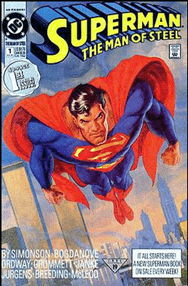
On the subject of collectibles, I found this idea interesting and wanted to pause on this topic for a moment. Collectibles are scarce and have stood the test of time if you’re choices are good, particularly when you consider traditional items in this space. Think gold coins over Bitcoin, fine art over Pokémon cards. Collectibles are also highly subjective and very personal. This is coming from someone who collects books and graphic novels and is very aware value is in the hands of the possessor. I’m also sure I can-not retire based on the value of my copies of various comic books.


Professor Damodaran firmly believes in trimming his profits but not exiting his positions entirely, which is very similar to our approach of “buy, hold, and rebalance”. No one can get timing right on a consistent basis.
Tilting at Windmills is an idiom describing the futility of fighting imagined enemies, originating from Miguel de Cervantes’ novel Don Quixote. I was reminded of this story when writing this due to all of the risks involved in investing, real and imagined. We have to be reminded there are differences in types of risk when looking at them. The older you become, the more fear of loss rises, as you can’t recoup losses as easily as younger investors. Performance is also relative. Just because your portfolio made less than the S&P 500 doesn’t mean you’ve under-performed on a risk adjusted basis. Every portfolio needs to be judged based on what it is expected to do for a particular investor. With this in mind, we make sure that each portfolio is customized to each client with a healthy safety margin since we can’t time when a market decides to correct.
This newsletter has been prepared by Stephen Maser of Raymond James Ltd. (“RJL”). It expresses the opinions of the writer, and not necessarily those of RJL. Statistics, factual data and other information are from sources believed to be reliable but accuracy cannot be guaranteed. It is furnished on the basis and understanding that RJL is to be under no liability whatsoever in respect thereof. It is for information purposes only and is not to be construed as an offer or solicitation for the sale or purchase of securities. RJL, its officers, directors, employees and their families may from time to time invest in the securities discussed in this newsletter. This provides links to other Internet sites for the convenience of users. Raymond James Ltd. is not responsible for the availability or content of these external sites, nor does Raymond James Ltd endorse, warrant or guarantee the products, services or information described or offered at these other Internet sites. Users cannot assume that the external sites will abide by the same Privacy Policy which Raymond James Ltd adheres to. It is intended for distribution only in those jurisdictions where RJL is registered as a dealer in securities. Distribution or dissemination of this newsletter in any other jurisdiction is strictly prohibited. This newsletter is not intended for nor should it be distributed to any person residing in the USA. Raymond James Limited is a Member Canadian Investor Protection Fund. Raymond James (USA) Ltd. (RJLU) advisors may only conduct business with residents of the states and/or jurisdictions for which they are properly registered. Raymond James (USA) Ltd., member FINRA/SIPC.